Dubai’s rental market is entering a new phase. After years of sharp price growth, the market is becoming more mature and competitive, with more supply giving tenants greater choice and property owners more to think about when deciding how to rent out their homes. Recent market commentary has pointed to softer rental conditions in parts of Dubai, while annual rental growth has also moderated compared with previous highs.
For both landlords and tenants, that shift has made one question more important than ever: is it better to commit to a traditional annual lease or explore the flexibility and earning potential of Dubai’s holiday home market?
This renting property in Dubai guide breaks down the key differences between short-term and long-term rentals, including income potential, flexibility, regulations, tenant expectations, and overall risk. Whether you are a landlord deciding how to position your property or a tenant weighing your housing options, understanding the short-term rental vs. long-term rental debate can help you make a more informed decision in Dubai’s changing property market.
Short-Term Rental vs Long-Term Rental: What’s the Difference?
When comparing a short-term rental vs. long-term rental in Dubai, the biggest difference is control. Long-term rentals offer stability, while short-term rentals offer greater flexibility and the ability to respond more quickly to changes in market demand.
Traditional Long-Term Rentals
A traditional long-term rental usually means signing a fixed one-year lease with a tenant. For landlords, this provides predictable income and fewer day-to-day operational responsibilities. Once the contract is signed, rent is typically fixed for the term of the lease, making it easier to forecast annual income. However, this also means landlords are locked into the agreed rate, even if demand in the area rises during the year.
Long-term rentals in Dubai are also subject to local rental regulations. Rent increases are guided by Dubai’s official rental index system, which helps determine whether an increase is permitted and by how much. This gives tenants greater protection against sudden rent hikes, but it can limit how quickly landlords are able to adjust pricing in a fast-moving market. The Dubai Land Department’s Rental Index is used to calculate rental increases and average market rent. The DLD has also introduced the Smart Rent Index as a tool to help regulate rent increases and improve market transparency.
Short-term Rentals or Holiday Homes
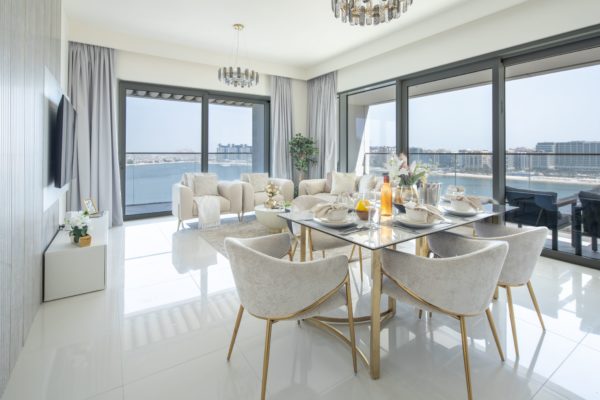
Short-term rentals, also known as holiday homes in Dubai, operate very differently. Instead of committing to one tenant for 12 months, landlords can rent the property for shorter stays and adjust pricing based on seasonality, occupancy, and citywide demand. This can be especially valuable during Dubai’s peak winter tourism months, major concerts, global conferences, exhibitions, and large sporting or business events.
This model can offer a higher yield ceiling, but it also requires a more active strategy. Short-term rental owners need to think about pricing, guest communication, cleaning, maintenance, listing optimisation, and compliance. In Dubai, holiday homes must also be registered and approved by Dubai’s Department of Economy and Tourism before being listed, so this route needs to be managed properly from the start.
The Landlord Reality Check
A long-term lease gives you steady income, but it locks you into a fixed price for 12 months. A short-term rental gives you more flexibility, allowing you to adjust your nightly rate in response to demand almost instantly. If a global conference, major concert, or peak travel period pushes demand higher, short-term pricing can reflect that in a way annual leases cannot.
For landlords who want predictability and minimal involvement, a long-term rental may be the safer fit. For those who want more flexibility, personal use of the property, and the potential to capture higher seasonal returns, a short-term rental may be more attractive — particularly when supported by professional property management.
What is the Average Rental Yield in Dubai?
The rental yield in Dubai remains one of the biggest reasons international and local investors continue to see the city as a strong property investment market. While rental prices are becoming more stable, Dubai still offers attractive gross yields compared with many mature global hubs. Recent market reporting places Dubai’s average rental yield at around 6.68%, with apartments averaging around 7.15%, while London averages are often closer to the 4% to 5% range.
In general, apartments tend to generate stronger percentage returns than villas because the purchase price is lower while tenant demand remains high. Villas and townhouses can still deliver high rental income, but their higher entry prices usually bring the percentage yield closer to 4.5% to 5.5%.
As a broad benchmark, smaller units such as studios and one-bedroom apartments in high-demand, high-density communities often generate the highest returns. Larger apartments, villas, and townhouses may offer more stability and long-term capital appreciation, but they usually produce lower percentage yields.
| 🏢 PROPERTY TYPE | 📈 INDICATIVE GROSS YIELD | 📍 EXAMPLE COMMUNITIES | ||
|---|---|---|---|---|
Property Type
|
Indicative Gross Yield7.0% – 9.0% | Example Communities JVC International City Dubai Silicon Oasis JVC International City Dubai Silicon Oasis |
||
Property Type
|
Indicative Gross Yield6.5% – 8.0% | Example Communities Business Bay JLT (Jumeirah Lake Towers) Al Furjan |
||
Property Type
|
Indicative Gross Yield5.5% – 7.0% | Example Communities Dubai Marina Downtown Dubai |
||
Property Type
|
Indicative Gross Yield4.0% – 5.5% | Example Communities Dubai Hills Estate Arabian Ranches |




Calculate Your Potential Returns
Use the Frank Porter Revenue Calculator to estimate your short-term rental income in any community.
It is important to remember that these are gross rental yields, meaning they do not account for service charges, maintenance, furnishing, vacancy periods, property management fees, or short-term rental operating costs. For investors, the more useful figure is net yield, which shows what the property actually earns after expenses.
Average Prices for Renting Property in Dubai
Understanding the average prices for renting property in Dubai is one of the most important steps for both landlords and tenants. For landlords, it helps set realistic pricing expectations before listing a property. For incoming expats, it provides a clearer idea of what monthly housing budgets may look like across different parts of the city.
Rental prices in Dubai vary widely depending on the neighborhood, property size, building quality, furnishing level, amenities, and proximity to transport, business districts, schools, and lifestyle destinations. However, the market can generally be divided into three broad tiers: budget, mid-market, and premium.
Budget Tier: Deira and International City
For renters looking for more affordable options, areas such as Deira and International City are often among the most accessible choices. In these communities, studio apartments typically start from around AED 2,500 to AED 3,500 per month, or approximately AED 30,000 to AED 42,000 per year.
These areas are popular with tenants who prioritise value, practical transport links, and access to everyday conveniences over luxury amenities. For landlords, budget-tier properties can offer strong tenant demand, but rental growth may be more price-sensitive, as tenants in this segment are often highly focused on affordability.
Mid-Market Tier: JVC, Arjan, and Al Furjan
The mid-market tier is where many Dubai residents look for a balance between affordability, space, amenities, and location. Communities such as Jumeirah Village Circle, Arjan, and Al Furjan are popular with young professionals, couples, and families who want newer buildings and good facilities without paying premium waterfront or downtown prices.
In these areas, one-bedroom apartments usually range from around AED 6,000 to AED 8,500 per month, or approximately AED 72,000 to AED 102,000 per year.
For landlords, this tier can be attractive because it offers a broad tenant pool and steady demand, particularly in well-maintained buildings with parking, gyms, pools, and easy access to key roads.
Premium Tier: Downtown Dubai, Dubai Marina, and Palm Jumeirah
At the premium end of the market, areas such as Downtown Dubai, Dubai Marina, and Palm Jumeirah command significantly higher rents due to their location, views, lifestyle appeal, and access to landmark destinations.
For two-bedroom apartments in these communities, renters should typically budget around AED 14,000 to AED 22,000 per month, or approximately AED 168,000 to AED 264,000 per year.
However, prices can move well above this range for larger layouts, furnished units, upgraded apartments, sea views, branded residences, or prime buildings on Palm Jumeirah.
For landlords, premium properties may offer stronger income potential, but pricing must be handled carefully. Tenants in this segment tend to compare building quality, view, furnishings, service standards, and amenities closely before committing.
As a general rule, landlords should not price based on citywide averages alone. The most reliable rental benchmark comes from comparing similar units in the same community, building, and condition. Tenants should also remember that advertised rents may not include additional costs such as deposits, agency fees, Ejari registration, utilities, chiller charges, parking, or furnishing costs.
Frequently Asked Questions (FAQs)
What is the average price of a rental house in Dubai?
In Dubai, “house” usually refers to a townhouse or villa rather than an apartment. Annual rents typically range from around AED 150,000 in family communities to AED 400,000+ in more exclusive areas, depending on location, size, condition, and amenities.
Family communities such as Dubai Hills Estate, Arabian Ranches, and The Springs generally offer more affordable options, while premium locations like Palm Jumeirah and Emirates Hills command much higher rents. Comparing similar properties is the best way to assess value.
Is $4,000 a month enough to live in Dubai?
Yes, for many people, $4,000 a month, or roughly AED 14,600, can be enough to live comfortably in Dubai, but it depends heavily on lifestyle, household size, and rental expectations.
For a single professional, this budget can be more than enough to rent a good mid-market apartment, cover utilities and transport, and still enjoy a comfortable lifestyle. Areas such as JVC, Arjan, Al Furjan, Dubai Sports City, and parts of Business Bay may offer practical options depending on current availability and furnishing level.
However, for a family of four, $4,000 a month can become tight. Once private school fees, a larger home, childcare, health insurance, car costs, groceries, and family entertainment are included, the budget may not stretch far, especially if the goal is to rent in a premium area such as Downtown Dubai, Dubai Marina, Dubai Hills, or Palm Jumeirah.
What are the hidden fees when renting property in Dubai?
The headline rent is only part of the cost of renting in Dubai. Tenants should also budget for several upfront and ongoing fees.
One of the main recurring costs is the Dubai Municipality housing fee, typically 5% of the annual rent, paid monthly through DEWA bills. Tenants must also pay for Ejari registration, which costs AED 177.75 online or AED 220 through a Real Estate Services Trustee Centre.
Many tenants will also pay an agency commission, usually around 5% of the annual rent, although minimum fees or VAT may apply.
Additional costs can include a security deposit, DEWA connection deposit, moving expenses, chiller and parking charges, furnishing costs, and any maintenance responsibilities set out in the tenancy contract. Before signing, tenants should calculate the full cost of moving in, not just the monthly rent.
Maximize Your Dubai Rental Property with Frank Porter
As the average prices for renting property in Dubai begin to stabilise, landlords are facing a more competitive market. Traditional long-term rentals can still offer steady income, but they also come with annual lease commitments, fixed pricing, and limits on how quickly rents can be adjusted.
For property investors who want to go beyond the yield ceiling of a standard long-term lease, Dubai’s short-term holiday rental market can offer a more flexible and potentially more lucrative alternative. With the right strategy, owners can adjust pricing around peak tourism seasons, major events, conferences, and changes in citywide demand, rather than being locked into one rental rate for 12 months.
That is where Frank Porter comes in.
Frank Porter offers a stress-free way for property owners to enter the short-term rental market without having to manage the day-to-day work themselves. From interior design guidance and staging to professional photography, Airbnb listing management, guest communications, housekeeping, maintenance, and ongoing pricing optimisation, Frank Porter handles the full guest experience from start to finish.