Dubai’s real estate market continues to attract international buyers seeking a tax-efficient investment environment, luxury living and the potential for long-term capital appreciation. Whether you are purchasing a home, a holiday residence or an investment property, understanding how to buy property in Dubai can help you make a confident, informed decision.
Buying property in another country may initially feel daunting. However, Dubai has a highly regulated real estate market, with transactions overseen by the Dubai Land Department and supported by digital registration services. With the right professional guidance, the process of buying property in Dubai is secure, transparent, and relatively straightforward.
Can Foreigners Buy Property in Dubai? Rules & Eligibility
Yes, foreigners can buy property in Dubai, even if they do not live in the UAE. International purchasers can acquire property in areas specifically designated for foreign ownership, and they do not need a UAE residency visa to complete a purchase. However, buyers should confirm that their chosen property is within an approved area and seek independent legal advice before signing a contract.
Foreign buyers have the same property ownership rights as other non-UAE nationals. Both UAE residents and overseas buyers can purchase freehold property in designated areas, making buying a house in Dubai possible without first obtaining a residency visa. Property ownership may provide a route to applying for certain investor residence visas, but eligibility for residency is separate from the right to purchase.
Foreign buyers should understand the distinction between the two main ownership structures:
- Freehold ownership: The buyer owns the property indefinitely, including the building and, where applicable, the land on which it stands. Popular freehold areas include Dubai Marina, Downtown Dubai, Palm Jumeirah, and Jumeirah Village, including JVC
- Leasehold ownership: The buyer acquires the right to occupy and use the property for a fixed period, which can be up to 99 years, rather than owning it indefinitely.
Dubai’s designated foreign-ownership areas are established through local laws and regulations. As classifications and plot boundaries can vary, buyers should verify the property’s ownership status with the Dubai Land Department before proceeding.
Is It Worth Buying Property in Dubai? The Investor Case
So, is it worth buying property in Dubai? For many international investors, the answer may be yes, but the right decision depends on the property, location, purchase price and long-term investment strategy. Dubai combines a tax-efficient environment with regulated transactions and property-linked residency options, although buyers should still account for market fluctuations, service charges, financing costs and currency risk.
A Tax-Efficient Property Market
Dubai does not levy personal income tax on individuals, while real estate investment income earned by individuals is generally excluded from the UAE’s corporate tax rules. Individual property owners also typically benefit from 0% UAE capital gains tax and no recurring annual property tax. However, buyers must still budget for Dubai Land Department registration fees, service charges, mortgage costs and other transaction expenses.
Stronger Buyer Protections
Dubai’s property market is regulated by the Dubai Land Department (DLD) and its regulatory arm, the Real Estate Regulatory Agency (RERA). For off-plan purchases, buyer payments are deposited into independent, project-specific escrow accounts, helping ensure that funds are used for the relevant development rather than diverted elsewhere.
Buyer protections have also been strengthened under the UAE’s updated Civil Transactions Law. The limitation period for bringing claims relating to latent or hidden defects has increased from six months to one year from delivery. This provides purchasers with more time to identify and raise qualifying defects, although buyers should still check the separate snagging and warranty provisions included in their sales agreement.
Property-Linked Residency Visas
Qualifying property ownership may also provide access to long-term UAE residency:
- 10-Year Golden Visa: Investors who own one or more properties with a combined purchase value of at least AED 2 million may apply for a renewable 10-year residence permit. Mortgaged properties may qualify, subject to evidence of the amount paid and the applicable DLD requirements.
- 2-Year Property Investor Visa: The previous minimum property value of AED 750,000 has been removed for individually owned properties. The DLD now states that a sole property owner may apply regardless of the property’s value. For jointly owned property, the applicant’s share must be worth at least AED 400,000.
These incentives can make Dubai attractive to both lifestyle buyers and investors. However, the best properties to buy in Dubai are not necessarily the most expensive or heavily advertised. Buyers should prioritize locations with proven demand, reputable developers, realistic rental yields, manageable service charges and strong prospects for long-term resale.
The Step-by-Step Process of Buying Property in Dubai
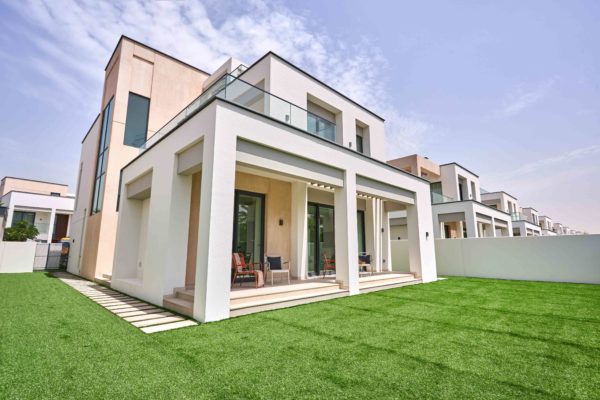
The process of buying property in Dubai is structured around signing a regulated sales contract, completing verification processes by the property’s developer and formally registering the property with the Dubai Land Department (DLD). Although the exact requirements may vary for mortgaged and off-plan properties, most completed-property purchases follow four main stages.
Step 1: Outline Your Property Strategy
Begin by considering what you want from the property. Someone buying a house in Dubai as a family residence or holiday home may prioritize space, schools, amenities and community facilities. By contrast, an investor researching how to buy an apartment in Dubai for rental income or resale may focus more closely on tenant demand, expected yields, service charges and future supply in the area.
Set a realistic budget that includes the purchase price, DLD registration fees, agency fees, mortgage costs and ongoing service charges. Before making an offer, check the seller’s ownership, the property’s title status and whether it is subject to a mortgage, lien or other restriction. Buyers should also inspect completed properties and conduct appropriate legal and technical due diligence.
Step 2: Sign the Memorandum of Understanding – Form F
Once the buyer and seller agree on the principal terms, they sign the DLD’s standard sale contract, known as Form F and commonly referred to as the Memorandum of Understanding. It sets out key details such as the agreed price, deposit, completion deadline, payment arrangements and the responsibilities of both parties. Additional terms may be attached, provided they do not conflict with the standard contract.
The UAE’s updated Civil Transactions Law also strengthens the framework governing pre-contractual negotiations. Parties are expected to deal transparently and disclose fundamental information that could affect the other party’s decision to proceed. Buyers and sellers should therefore ensure that material details, including known defects, financing conditions and transaction deadlines, are accurately recorded before signing.
Step 3: Obtain the Developer’s No Objection Certificate
Before the ownership can be transferred, an electronic No Objection Certificate, or e-NOC, will normally be required from the property’s developer in a freehold area. The certificate confirms that the seller has settled outstanding service charges and has complied with the relevant obligations attached to the property.
The seller will usually apply for the NOC, although both parties may need to provide documents or attend an appointment with the developer. Any unpaid charges or unresolved issues will usually need to be dealt with before the certificate is issued.
Step 4: Complete the Final Transfer with the DLD
The final stage takes place through a Real Estate Registration Trustee Center. The buyer, seller or their legally authorized representatives submit the required documents, including identification and the developer’s e-NOC. The transaction is then checked and entered into the DLD system.
Once the remaining purchase funds and registration fees have been paid and the transaction has received approval, ownership is transferred to the buyer. The DLD then issues an electronic title deed in the new owner’s name, formally completing the purchase.
Financial Checklist: How Much Money Do You Need?
There is no single minimum budget for purchasing a house or apartment, as prices vary significantly by location, property type and development. Cash buyers should generally budget for the full purchase price plus approximately 6%–8% in transaction costs. Buyers using a mortgage will need enough to cover their required down payment and most purchasing fees from their own funds. Apartments may have a lower purchase price than villas, but the percentage-based registration and agency fees are broadly the same.
| Expense Category | Typical Cost / Fee Percentage | Who Pays? |
|---|---|---|
| Expense CategoryDubai Land Department (DLD) Fee | Typical Cost / Fee Percentage4% of the property value, plus administrative charges | Who Pays?Officially divided as 2% for the buyer and 2% for the seller, although the contract may require the buyer to cover the full 4% |
| Expense CategoryReal Estate Agency Commission | Typical Cost / Fee PercentageTypically 2% of the property value, usually plus VAT | Who Pays?Buyer |
| Expense CategoryDeveloper NOC Fee | Typical Cost / Fee PercentageApproximately AED 500–AED 5,000, depending on the developer | Who Pays?Seller (typically) |
| Expense CategoryRegistration Trustee Fee | Typical Cost / Fee PercentageAED 2,000 plus VAT for properties below AED 500,000; AED 4,000 plus VAT for properties valued at AED 500,000 or more | Who Pays?Buyer |
| Expense CategoryCash Deposit / Down Payment | Typical Cost / Fee PercentageTypically 10% of the agreed price | Who Pays?Buyer; usually credited towards the purchase rather than charged in addition to it |
| Expense CategoryOff-plan booking payment | Typical Cost / Fee PercentageCommonly 10%–20%, depending on the developer’s payment plan | Who Pays?Buyer |
The DLD also charges smaller administrative fees for documents such as the title deed and property map. Buyers should account for these rather than treating them as part of the purchase price. Buyers using finance must distinguish between a reservation deposit and a mortgage down payment.
Under UAE Central Bank loan-to-value rules, expatriates purchasing their first owner-occupied property can generally borrow up to 80% of its value when the property is worth AED 5 million or less. This means they will normally require a down payment of at least 20%, in addition to transaction costs. Lower lending limits apply to more expensive homes, investment properties and off-plan purchases.
Mortgage buyers may also face valuation, arrangement and mortgage-registration fees, while all purchasers should check future service charges, maintenance expenses and insurance costs before committing. Exact charges can vary by property, lender, developer and the terms negotiated between the buyer and seller.
Where and What to Buy: Best Properties to Buy in Dubai
The best properties to buy in Dubai depend on whether your priority is consistent rental income, short-term holiday-let revenue or long-term capital growth. Investors should compare the purchase price with realistic rental demand, service charges, management costs and the level of competing supply within each development.
For Strong Rental Yields: Studios and One-Bedroom Apartments
Compact apartments often appeal to a wider pool of professionals, couples and individual tenants while requiring less initial capital than larger properties. Jumeirah Village Circle, Business Bay and Jumeirah Lakes Towers are established options for investors seeking a balance between entry price and long-term rental demand.
| Location | Why Investors consider it | Property types to prioritize |
|---|---|---|
| LocationJumeirah Village Circle (JVC) | Why Investors consider itComparatively accessible prices, extensive amenities and strong demand for mid-market apartments | Property types to prioritizeModern studios and one-bedroom apartments with manageable service charges |
| LocationBusiness Bay | Why Investors consider itA central location close to Downtown Dubai that attracts professionals and corporate tenants | Property types to prioritizeStudios and one-bedroom units near transport links and commercial districts |
| LocationJumeirah Lakes Towers (JLT) | Why Investors consider itAn established mixed-use community with access to the Metro, offices, restaurants and leisure facilities | Property types to prioritizeWell-maintained studios and one-bedroom apartments within walking distance of a Metro station |
For Premium Short-Term Holiday Lets
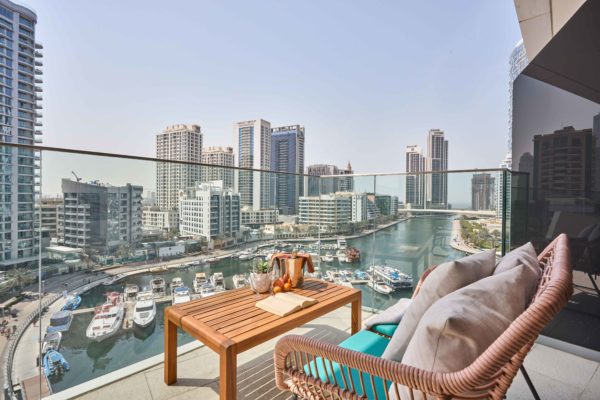
Dubai Marina, Downtown Dubai and Palm Jumeirah can be particularly attractive to investors hoping to attract tourists, business travelers and seasonal visitors. These premium locations can achieve higher nightly rates, although they usually involve higher purchase prices, service charges and property-management costs.
- Dubai Marina: Well-positioned apartments benefit from access to the waterfront, beaches, restaurants and public transport. Furnished studios and one-bedroom units can suit couples and short-stay visitors.
- Downtown Dubai: Properties near major attractions and business districts may appeal to both leisure and corporate guests. Investors should prioritize buildings with convenient access, strong amenities and clear holiday-home policies.
- Palm Jumeirah: Premium apartments and villas can achieve higher rates from guests seeking beachfront accommodation, privacy and luxury facilities, although operating and maintenance costs can also be substantial.
Dubai Marina led demand for luxury daily and monthly apartment rentals in 2025, followed by Downtown Dubai, while Palm Jumeirah remained a prominent market for premium short-term villa rentals.
Properties intended for holiday lets should ideally be furnished, easy to maintain and located in buildings with guest-friendly facilities such as reception services, parking, swimming pools and gyms. Owners must also check that short-term letting is permitted within the building and obtain the appropriate holiday-home permit from Dubai’s Department of Economy and Tourism before accepting bookings.
Before selecting an area, calculate the expected net return after service charges, furnishing, utilities, cleaning, management fees and periods when the property may be unoccupied.
Frequently Asked Questions
Can You Buy Property in Dubai Remotely?
Yes. Buyers who cannot attend the transfer in person can appoint a legal representative or trusted partner through a verified Power of Attorney (POA). The authorized representative can sign documents and complete the Dubai Land Department transfer on the buyer’s behalf, provided the POA meets the required legal and authentication standards.
What Is the Legal Age for Signing a Property Contract?
The legal age of majority in the UAE is now 18 Gregorian years. Anyone who has reached 18 and has full legal capacity can enter into a property contract independently. This was reduced from the previous threshold of 21 lunar years under the updated UAE Civil Transactions Law.
Are There Recurring Taxes After Buying?
Dubai does not generally impose an annual property tax simply for owning a residential property. However, owners of apartments and properties in jointly owned communities must pay annual service charges covering shared facilities, security, cleaning and building maintenance. Charges vary by development and are regulated through RERA’s Mollak system.
International owners should also check whether rental income or future capital gains create tax liabilities in their country of residence.
Maximize Your New Asset with Frank Porter
Understanding how to buy property in Dubai is only the beginning. The long-term success of your investment depends on how effectively the property is presented, priced and managed after handover, particularly when targeting Dubai’s competitive short-term rental market.
Frank Porter provides premium, end-to-end property management for houses and apartments across Dubai. Our team handles everything from interior design and listing preparation to dynamic pricing strategies, day-to-day operations and five-star guest services. By adjusting rates in line with demand and delivering a consistently high-quality guest experience, we help maximise occupancy, revenue and the overall potential of your new asset.
Whether you are buying a house in Dubai as a luxury holiday home or investing in an apartment for short-term rental income, Frank Porter can manage the entire process on your behalf. Turn your newly acquired property into a professionally managed, high-performing rental with support from a team that understands the Dubai market.
Speak to Frank Porter about managing your Dubai property today.